Types of House Siding in Middle Tennessee: What You Have and Why
Your house almost certainly has the siding it has because of the year it was built. Builders used whatever was cheap, available and fashionable at the time, street by street and subdivision by subdivision. That is why a whole cul-de-sac in Antioch has the same swelling hardboard, and why half of Lockeland Springs has painted wood. This guide works through every siding type you will find around Nashville, Franklin and Murfreesboro: what it is, what it is made of, which houses have it, and what is good and bad about living with it.
Start here
- Find your build decade first. It narrows the answer faster than looking at the wall does.
- Built 1980 to 1998 and the bottom edges look swollen? That is probably hardboard, and there is a well-documented reason it is failing.
- Built before about 1980 with small, brittle, chalky shingles? Read the asbestos section before anyone touches it.
- In a historic district? The rules may decide your material for you. Vinyl is often not allowed.
Four checks at the wall
The decade table below narrows it down. These four checks confirm it, and none of them takes more than a minute.
- Knock on it. Fiber cement and brick ring solid and feel heavy. Vinyl sounds hollow and gives a little under your knuckle. Aluminium sounds tinny and thin.
- Run your hand down it. Chalky powder on your palm means aluminium, or vinyl old enough to have oxidised.
- Look at the bottom edge of a board. Swollen, soft and furry means hardboard. Split, checked and flaking means real wood. Crisp and unchanged means vinyl, fiber cement or engineered wood.
- Find a vertical joint. Vinyl panels lap over one another and leave an obvious vertical seam every few feet. Fiber cement and engineered wood meet in a butt joint that is caulked or covered by a trim strip. Brick has no vertical joints of that kind at all.
Small brittle shingles with a wavy bottom edge and thick chalky paint are a separate case. That is possibly asbestos-cement, and the right check is to stop and have it tested rather than handle it.
Find your house by its decade
| Built | Most likely siding | Watch for |
|---|---|---|
| Before 1900 | Wood clapboard, brick | Later layers hiding the original wood |
| 1900 to 1940 | Wood clapboard, wood shingle, brick | Asbestos or aluminium added later |
| 1940 to 1970 | Brick veneer, asbestos-cement, aluminium, wood | Asbestos shingles |
| 1970 to 1980 | Aluminium, early vinyl, hardboard, brick | The start of the hardboard era |
| 1980 to 1998 | Hardboard (Masonite), vinyl, brick fronts | Swelling and rot at the bottom edge |
| 1998 to 2010 | Vinyl, brick fronts, early fiber cement | Faded, brittle vinyl now at end of life |
| 2010 to now | Fiber cement, engineered wood, vinyl, brick | Installation quality more than material |
How Middle Tennessee got built
The siding on your house is a fossil of a building era. It helps to know which one.
1779 to 1860: founding and the first permanent houses
Nashville starts as Fort Nashborough in 1779, settled by a group led by James Robertson and John Donelson. It is renamed Nashville in 1784 and becomes a city in 1806. Franklin is founded on 26 October 1799 by Abram Maury Jr, the same day Williamson County is created. Murfreesboro is chartered in 1811 and serves as the state capital of Tennessee from 1818 until 1826, when the assembly left for good. Nashville became the permanent capital in 1843.
Houses from this period are log, brick, or heavy timber clad in wide wood boards. Almost nothing from this era survives as ordinary housing stock, but the brick tradition it started never really stopped here.
1870 to 1900: the Victorian city
This is the cottage-and-gingerbread era: steep roofs, decorative trim, tall narrow windows, and narrow painted wood clapboard almost universally. The surviving pockets are what later became Nashville’s historic districts.
1890 to 1935: streetcars make the first suburbs
This period built most of the old neighbourhoods people love now. By 1890 electric streetcar lines could run well beyond downtown, cheap land near the lines opened up, and middle-class neighbourhoods appeared on lots that had been estates.
East Nashville was platted by the East Edgefield Land Company and served by electric lines down Woodland, Shelby and Fatherland, with East End among the first of many subdivisions. Inglewood Place was first laid out in 1909, expanded in 1919 and again in 1933, with its big building boom through the 1920s and 1930s. Belmont-Hillsboro was subdivided from the Acklen and Montgomery estates in 1890 and 1891, got its streetcar line on Belmont Boulevard in 1901, and did most of its building between 1905 and 1920.
Siding here is wood: clapboard on the body, often wood shingle in the gables. Bungalows and four-squares dominate.
1945 to 1970: the ranch boom
Returning veterans with GI Bill mortgages drove a national building boom, and Nashville spread. Green Hills had seen small-scale building in the 1930s but filled in after the war, mostly brick-veneer ranch houses on large lots. Donelson developed right after the war. Marlin Meadows in Madison was built out mainly between 1952 and 1959. The Federal Aid Highway Act of 1956 and the arrival of the interstates pushed growth further out; I-65 through Williamson County was finished in the late 1960s, which is the beginning of Brentwood and Franklin as commuter towns.
The ranch is the defining house: one storey, low-pitched roof, wide eaves, carport, picture window. Brick veneer is the default, with wood, aluminium or asbestos-cement on the gable ends and secondary walls.
1970 to 2000: subdivisions, and the problem materials
This is where most of the metro’s housing stock actually comes from, and where the siding problems concentrate. Vinyl became mainstream in the 1970s. Hardboard siding was installed heavily through the 1980s and 1990s. The brick-front-with-siding-on-the-sides pattern becomes the standard builder detail across Antioch, Smyrna, La Vergne, Hermitage and outer Murfreesboro.
2000 to now
Fiber cement and engineered wood take a growing share, especially in Williamson County and the newer parts of Mt. Juliet, Nolensville and Spring Hill. Vinyl is still widely used. Board and batten returns as a styling choice on gables and farmhouse-look builds.
Every siding type, one at a time
The photographs below are illustrations of what each material typically looks like, not identification references. Siding varies by manufacturer, age and how many times it has been painted. Use them to narrow down what you are looking at, then confirm it properly, and in the case of suspected asbestos have it tested rather than judged by eye.
Wood clapboard (also called lap or weatherboard)
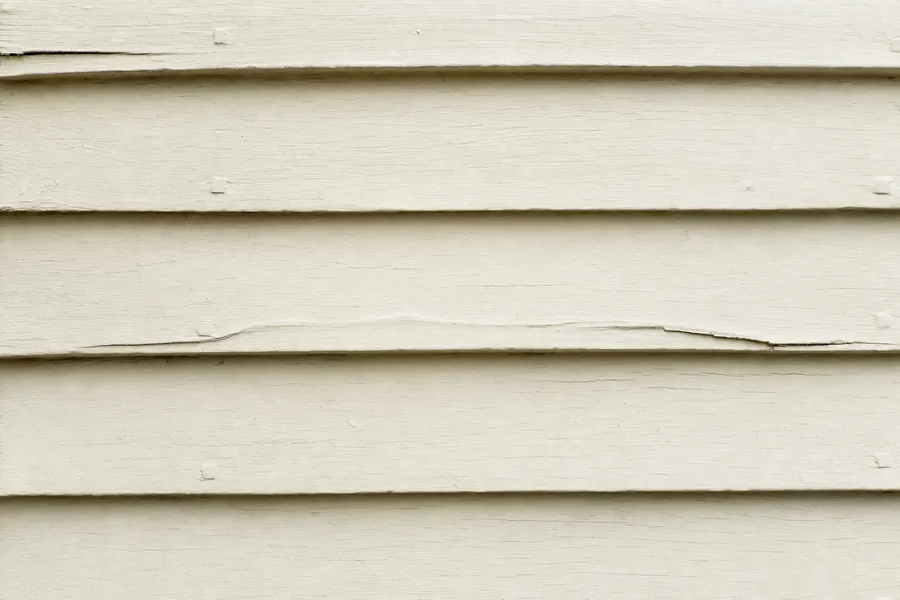
What it is: long horizontal boards, each overlapping the one below, painted. The oldest exterior, and still the most authentic one for a historic house.
Made of: solid timber, historically poplar, pine or cypress here.
Found on: anything built before about 1940. East Nashville, Germantown, Edgefield, Belmont-Hillsboro, downtown Franklin, older parts of Murfreesboro.
Good: it can be repaired board by board rather than replaced wholesale, it takes paint well, and it is the only material that looks right on a Victorian or a bungalow. It is also what historic districts want to see. Properly maintained wood lasts a very long time.
Bad: it needs painting roughly every 7 to 10 years in this climate, and that is the real cost of owning it. It rots where water sits, especially at the bottom course and where boards meet trim. It burns. Insects eat it. Expect $5 to $15 per square foot installed, and a 20 to 40 year life if maintenance slips.
Wood shingle and shake
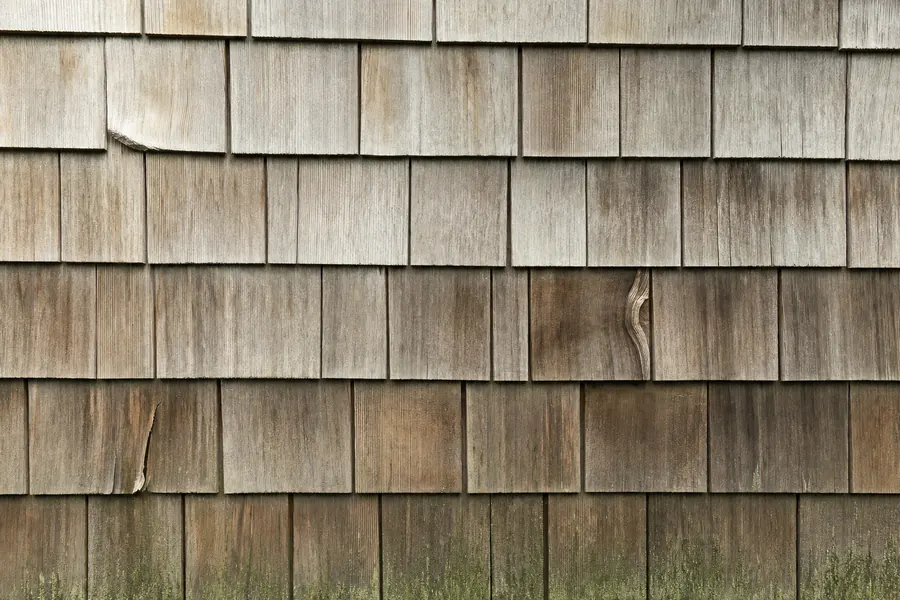
What it is: small overlapping pieces rather than long boards. Shingles are sawn and smooth; shakes are split and rough.
Made of: usually cedar.
Found on: gable ends and dormers of bungalows and Tudor-style houses, and as a full wall treatment on some upper-tier homes in Green Hills and Belle Meade.
Good: excellent texture, and the correct detail for certain house styles. Cedar naturally resists insects.
Bad: the most maintenance-hungry option on this list. In Middle Tennessee humidity, shaded north-facing cedar grows algae and holds moisture. Expect to clean and re-treat on a cycle, and to replace individual pieces regularly. $6 to $16 per square foot.
Asbestos-cement shingle
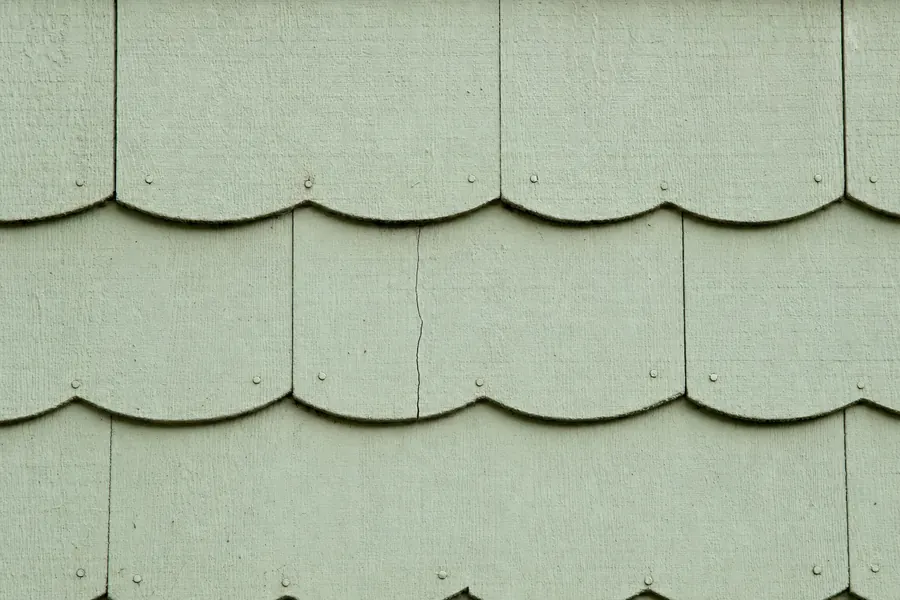
What it is: small, hard, brittle shingles, usually around 12 by 24 inches, often with a slightly wavy bottom edge and many layers of old paint.
Made of: cement mixed with asbestos fibre, pressed into thin sheets. First made in 1907 and installed into the early 1980s.
Found on: houses built or re-clad roughly 1930 to 1975. Very common on modest post-war houses across Davidson County, and frequently installed straight over original wood clapboard, which means the wood may still be underneath.
Good: genuinely durable, fireproof, and it does not rot or feed insects. Intact asbestos siding sitting on your wall is not hurting you.
Bad: brittle, cracks easily, cannot be nailed through, and matching replacement pieces is close to impossible. The serious issue is removal. Breaking, sanding, cutting or power-washing it releases fibres. Do not test it by snapping a piece off. Get it tested, and if it comes back positive, removal is a specialist job with its own disposal rules.
One more thing on older houses: any paid renovation work on a home built before 1978 falls under the federal lead-paint rule, which requires the firm to be EPA lead-certified. That applies to siding exactly as it applies to windows. We covered that rule in what drives window replacement cost.
Aluminium
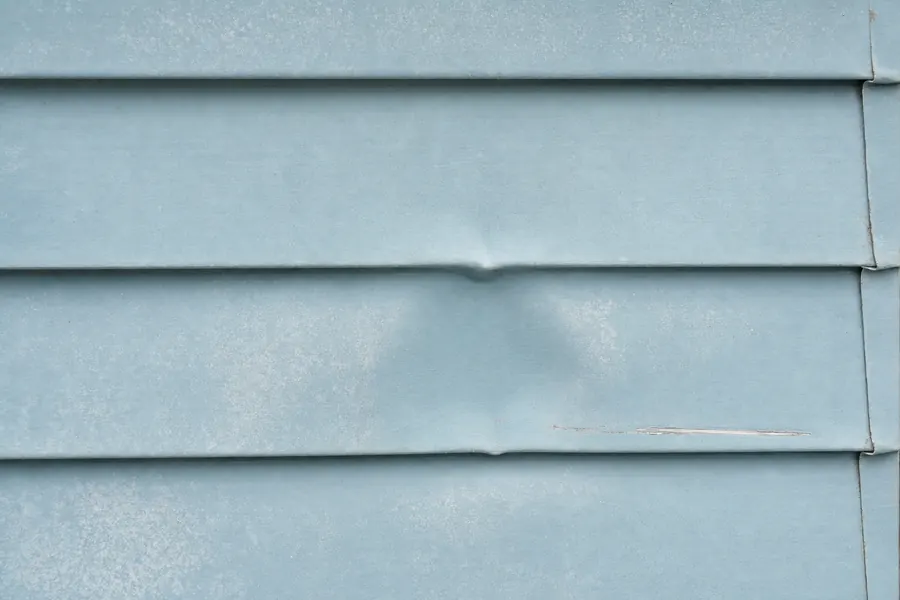
What it is: thin painted metal panels, usually in a horizontal lap profile.
Made of: rolled aluminium with a baked finish. It arrived in the late 1930s and 1940s and was a mainstream choice through the post-war decades.
Found on: post-war houses, and as a retrofit over wood on older houses in the 1960s and 1970s. Madison, Donelson, Inglewood, older Murfreesboro.
Good: does not rot, burn or feed insects, and it is light. Old aluminium can be repainted, which is often the cheapest way to deal with it.
Bad: it dents permanently, from hail, ladders, mowers and baseballs, and dents cannot be popped out. The finish chalks as it ages, leaving powdery residue on your hand. It conducts heat, so it insulates poorly, and it can be noisy in wind and rain. $6 to $10 per square foot.
Hardboard, usually called Masonite
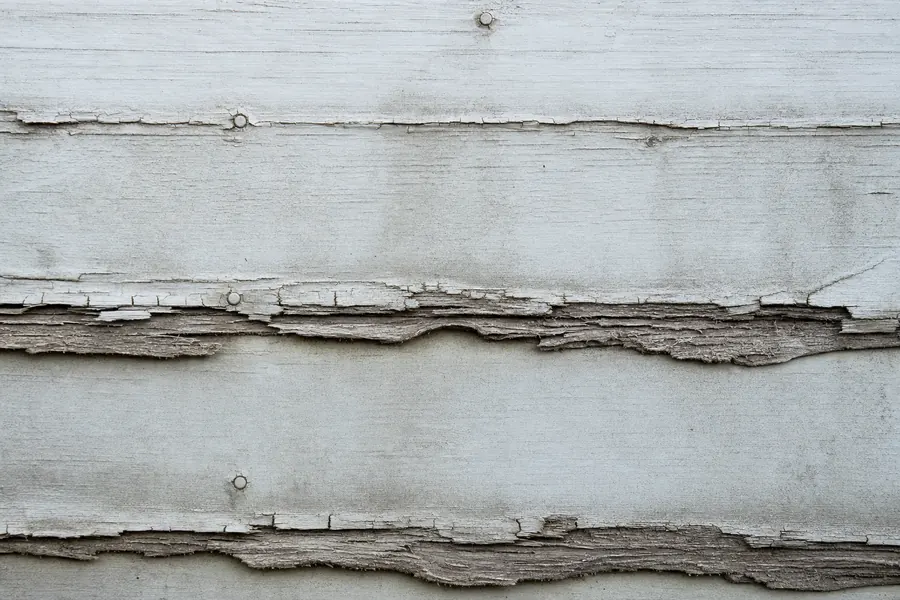
This is the one most people come looking for, so it gets the longest entry.
What it is: boards that look like painted wood lap siding but are a manufactured composite. Masonite is a brand name that became the general term, the way people say Hoover for a vacuum cleaner.
Made of: wood fibres, wax and resin, pressed under heat into dense boards. It is wood, but shredded and reconstituted, which matters enormously for how it fails.
Found on: houses built roughly 1980 to 1998, which in this metro means a very large share of Antioch, Hermitage, Smyrna, La Vergne, Old Hickory and the outer rings of Murfreesboro. Entire subdivisions went up with it, which is why whole streets have the same problem at the same time.
How to identify it: look at the bottom edge of the boards, particularly on the north side and anywhere near the ground, gutters or a splash zone. Failing hardboard swells like a wafer: the bottom edge thickens, softens and goes furry. You may also see swelling rings around nail heads, cracking along edges, and a dark waxy bleed on the surface.
The part worth knowing: this is not just your house. A nationwide class action, Naef v. Masonite Corp., was filed in 1994 on behalf of owners of property with Masonite hardboard siding installed between 1 January 1980 and 15 January 1998. A month-long jury trial in 1996 established that the siding was defective under the laws of most states, and the court approved a settlement in 1998 worth more than $1 billion, covering an estimated 4 million homeowners. The agreed damage signatures read like a checklist of what to look for: swelling around nail holes, buckling of more than a quarter inch between studs, edge cracking, thickness swelling over 15 percent, fungal degradation, and wax bleed.
What that means for you now: the claims programme ran through 2008 and is closed, so you cannot file today. The history is still useful for two reasons. It tells you the failure is a known product defect rather than neglect on your part, and it gives you the exact language to point at when you get quotes.
Good: cheap, $4 to $8 per square foot, and it did take paint well.
Bad: it absorbs water at any unsealed cut, edge or nail hole, and in this humidity it stays wet long enough to swell and rot. Painting slows that down but does not stop it once moisture is inside the board. It is the only material on this list we would say plainly: do not install it new.
Vinyl
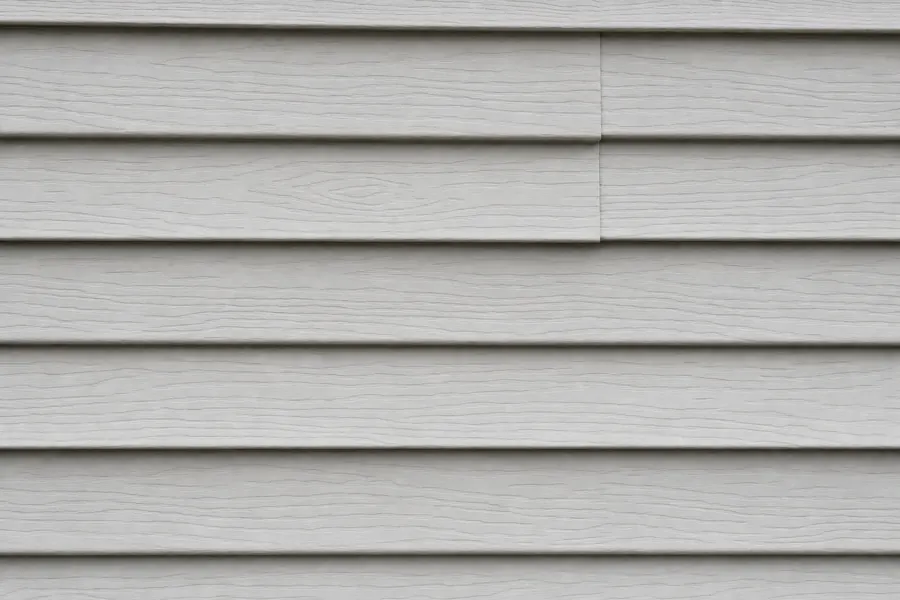
What it is: moulded plastic panels that hook together and hang loose on the wall.
Made of: PVC plastic, with the colour running through the whole thickness rather than painted on. Produced from the 1950s, mainstream from the 1970s.
Found on: the single most common siding in the metro. Everywhere built from about 1975 onward outside the upper tier, and widely used as a replacement on older houses.
Good: cheapest practical option at $4 to $12 per square foot, never needs painting, does not rot or feed insects, and comes in a huge range of colours and profiles. A 30 to 40 year life is realistic.
Bad: it expands and contracts a lot with temperature, which is why it must hang loose rather than be nailed tight. A crew that nails it home leaves you with buckled walls by the first hot August. It cracks on impact, especially when cold, so hail and stray baseballs do real damage. Colour fades in strong sun, and faded panels are very hard to match for a later repair. Dark colours absorb heat and can warp, which matters more here than in cooler states. It is also not permitted in Nashville’s stricter historic districts.
Engineered wood (LP SmartSide and similar)
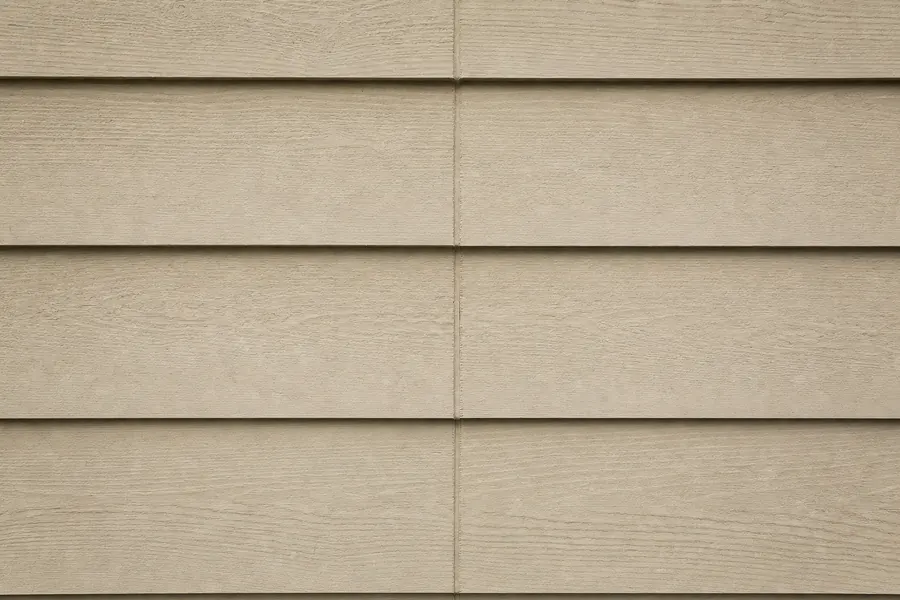
What it is: the modern, properly engineered answer to what hardboard was trying to be.
Made of: wood strands and fibres bonded with resins, treated with zinc borate against rot and termites, and factory-coated.
Found on: newer builds from roughly 2005 onward, and increasingly used in renovations.
Good: real wood texture, lighter and easier to cut than fiber cement, holds paint well, and far more rot-resistant than the hardboard it replaced. $7 to $12 per square foot, 30 to 50 year life.
Bad: it is still a wood product, so cut ends must be sealed and ground clearance matters. It needs repainting eventually, unlike vinyl. And it carries the reputational shadow of hardboard, which makes some buyers suspicious even though the product is genuinely different.
Fiber cement (Hardie and others)
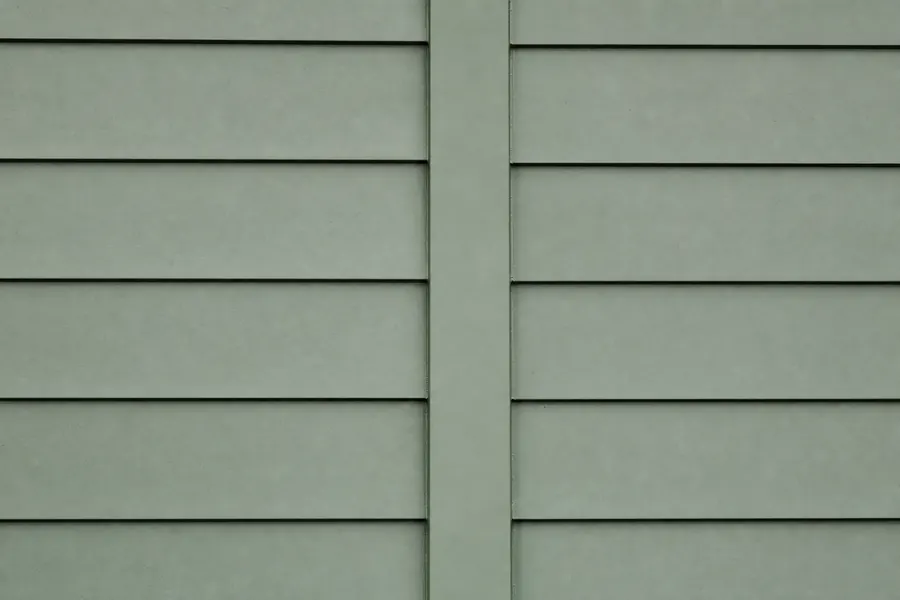
What it is: the most popular upgrade material in the metro right now.
Made of: cement, sand, water and cellulose fibre. Developed by James Hardie in the mid-1980s.
Found on: newer Williamson County construction, renovations across the board, and it is the material historic districts will approve in its smooth form.
Good: does not rot, burn or feed insects, holds paint for a long time, and carries a 50 to 75 year service life. In a humid climate it is the strongest all-round performer.
Bad: heavy and brittle to work with, so installation labour costs more and poor installers do real damage. Cutting it produces silica dust that needs proper control. It still needs repainting eventually. $6 to $15 per square foot generally, and $16 to $40 for James Hardie branded product installed.
We are writing a separate guide on Hardie specifically, because the questions people ask about it deserve more room than one entry here.
Brick
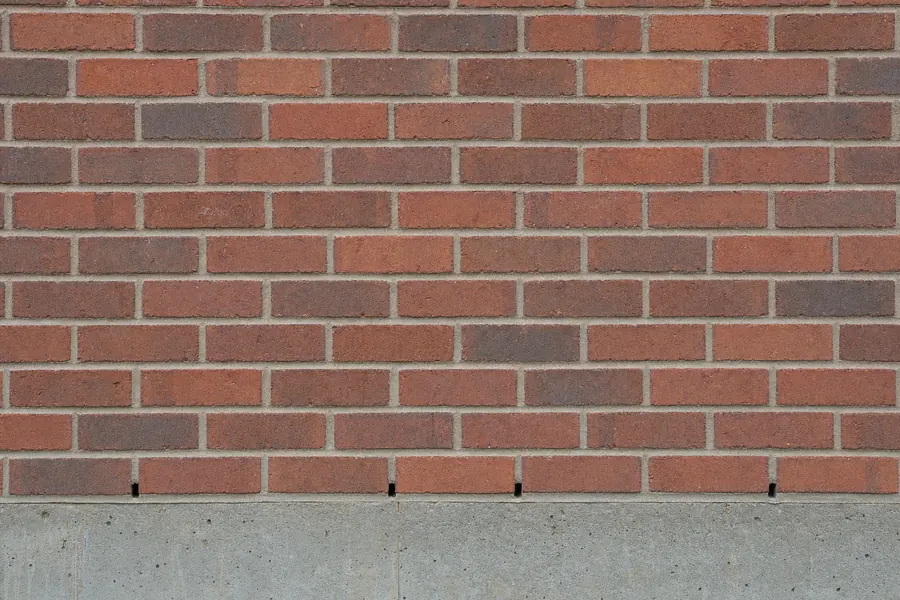
What it is: on almost every house here it is brick veneer, a single decorative layer tied to a wood-framed wall, not structural brick.
Found on: the regional default. Full brick on upper-tier houses in Brentwood, Green Hills and Franklin; brick fronts with siding on the sides across the mid-market.
Good: outlasts everything else, needs essentially no maintenance, does not burn or rot, and holds value.
Bad: most expensive common option at $8 to $18 per square foot, cannot be changed without a major job, and mortar joints eventually need repointing. The weak points are the flashing and the weep holes at the bottom, which people caulk shut without realising those holes are the drainage for the entire wall.
Stucco
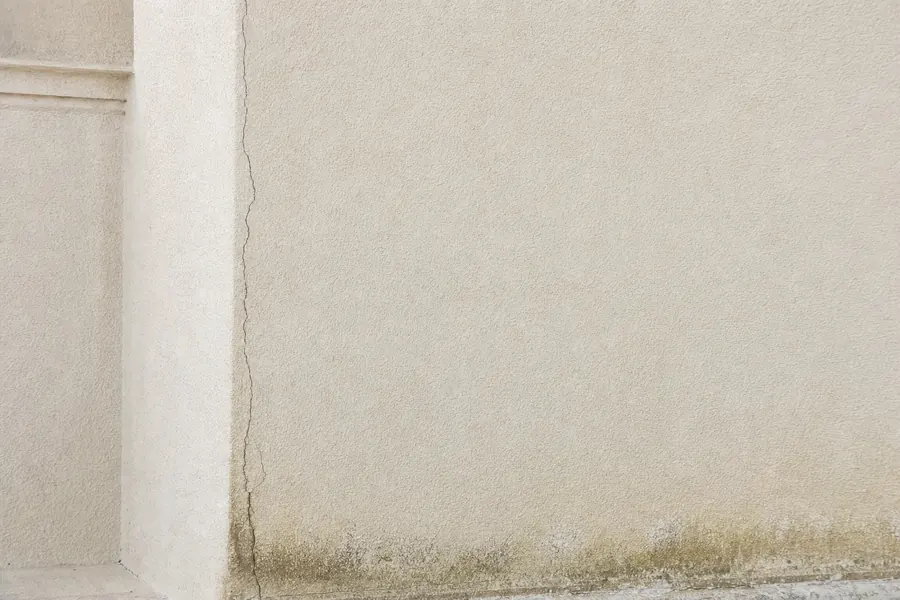
What it is: a cement-based plaster applied in layers over the wall.
Good: long-lived at 50 to 80 years, seamless appearance, fire resistant.
Bad: unforgiving of water getting behind it, and this is a wet climate. Cracks need prompt attention. It is also the material most dependent on the installer getting the hidden drainage layer right, which you cannot inspect once it is finished. $7 to $17 per square foot.
Stone and manufactured stone
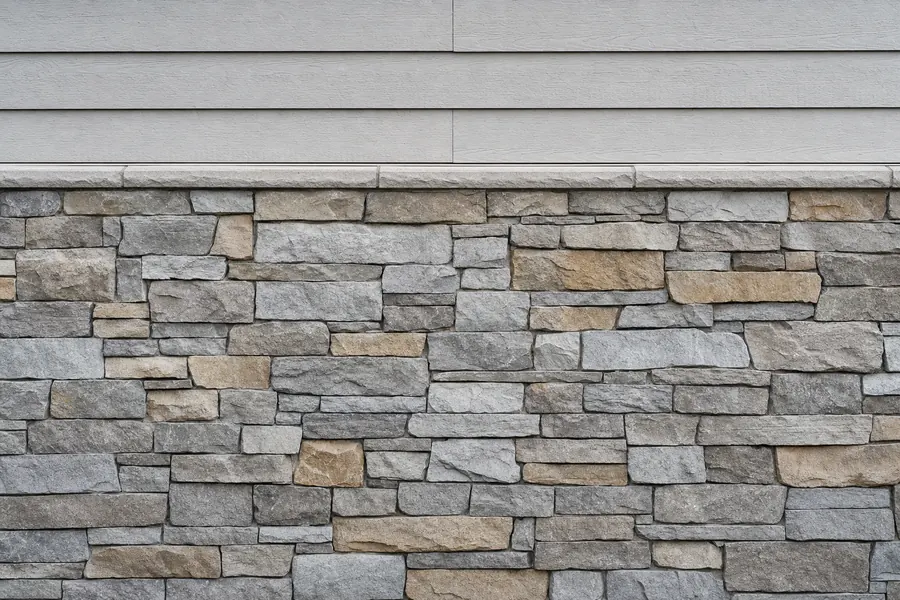
What it is: natural stone or a moulded cement product that imitates it, almost always used as an accent rather than a whole wall.
Good: appearance and durability.
Bad: by far the most expensive at $10 to $45 per square foot. Manufactured stone in particular fails where it meets the ground or lacks a proper drainage gap, and badly installed stone traps water against the wall behind it.
Steel
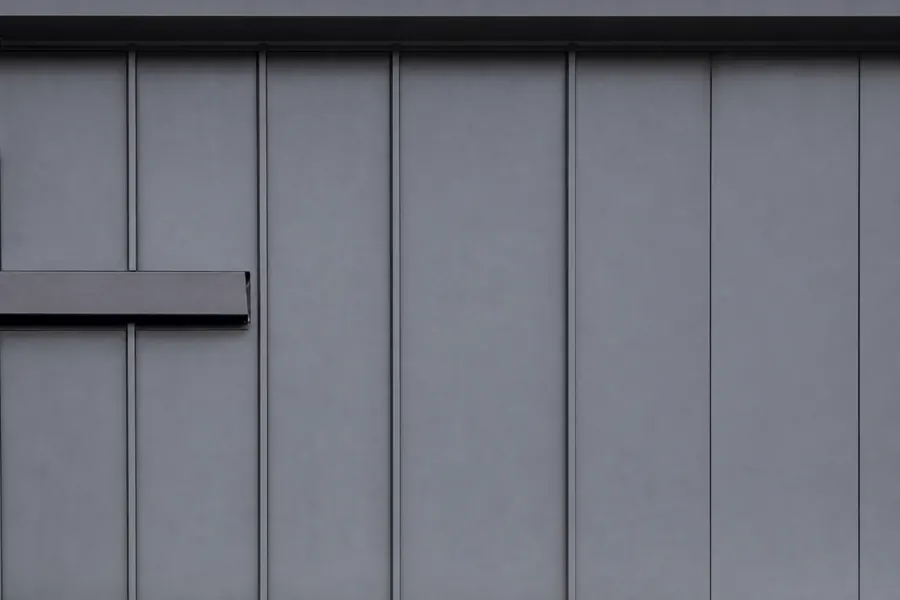
What it is: the tougher descendant of aluminium siding.
Good: resists dents far better than aluminium, 40 to 70 year life, does not burn or rot.
Bad: uncommon on houses here, so fewer local crews install it well, and it can rust at cut edges and scratches. $7 to $16 per square foot.
A note on profiles: shiplap, board and batten, Dutch lap
These are shapes, not materials, and the difference causes a lot of confusion when people are comparing quotes. Any of them can be made in wood, vinyl, fiber cement or engineered wood. The material decides durability; the profile decides looks.
- Lap or clapboard: plain horizontal overlapping boards. The default.
- Dutch lap: lap siding with a decorative groove along the top of each board. Common on mid-century houses and on vinyl.
- Shiplap: boards with a rebated edge so they sit flush against each other instead of overlapping, leaving a neat groove. Interior shiplap is a decorating trend. Exterior shiplap is a different and more demanding thing. Because the boards meet flush rather than shedding water over a lap, the joint relies entirely on the gap, the sealant and the drainage layer behind it. On a wet wall in this climate that is a real risk, and horizontal exterior shiplap is the profile most likely to trap water if it is fitted tight or caulked solid. If you want the look, the safe version leaves a ventilated gap behind the boards so the wall can dry. Ask any contractor proposing it exactly how the wall drains.
- Board and batten: wide vertical boards with narrow strips covering the seams. Sheds water well because it runs vertically. Currently fashionable on gables and farmhouse-style builds.


Which is best value over time
The sticker price per square foot is the wrong number to compare, because these materials do not last the same length of time. Divide installed cost by expected service life and the order changes.
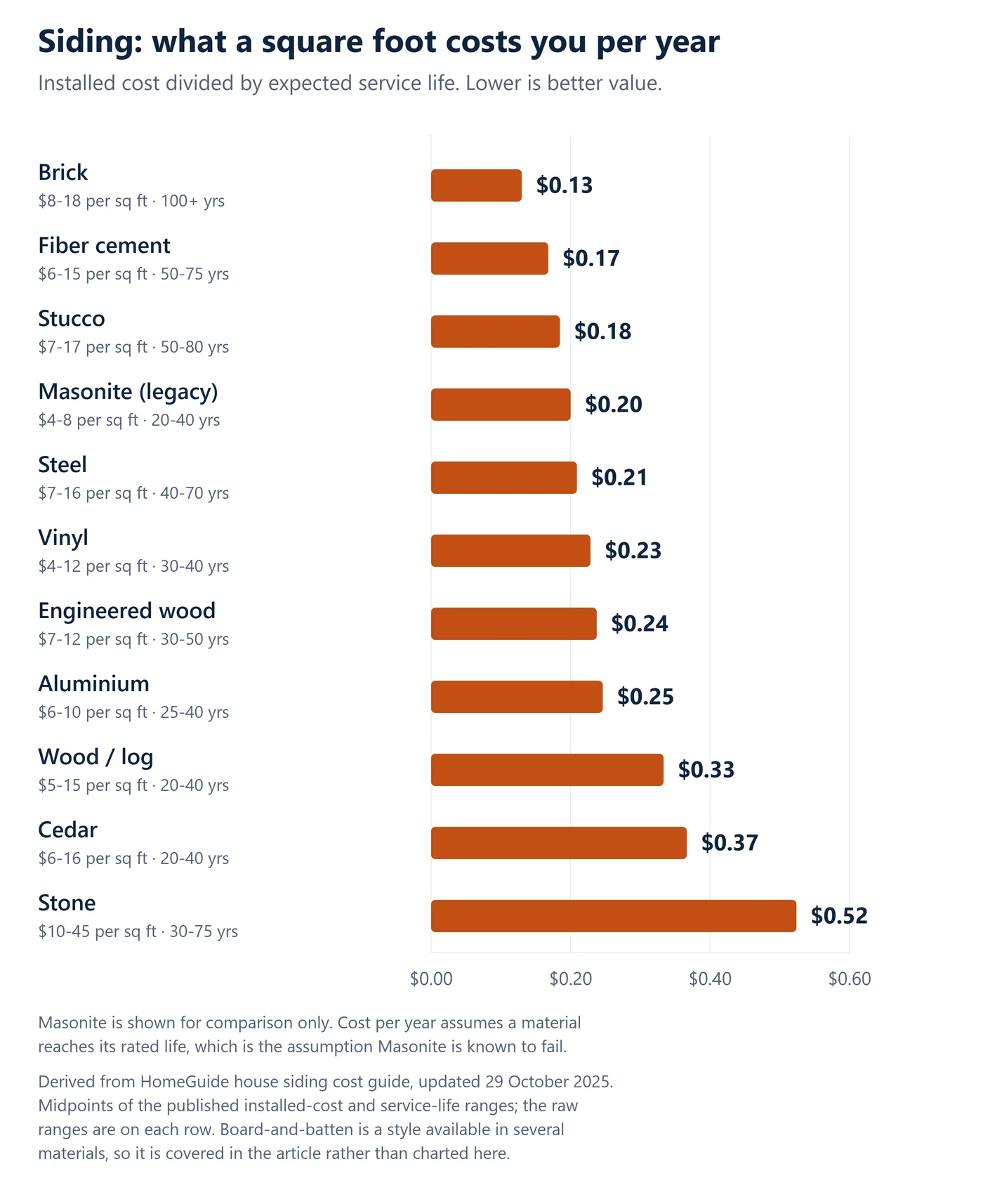
Two warnings about reading that chart. Hardboard looks reasonable on it only because the sum assumes a material reaches its rated life, which is exactly the assumption hardboard is famous for failing. And wood and cedar look expensive partly because their figures assume ordinary maintenance; a well-kept wood house can outlast the number shown by decades.
What it costs to do a whole house
Per-square-foot pricing is how contractors quote, but it is not the number you actually want. Siding a house runs $4 to $13 per square foot installed, which comes to $10,000 to $32,500 for a 2,500 square foot home.
| House size | Installed cost |
|---|---|
| 1,000 sq ft | $4,000 to $13,000 |
| 1,200 sq ft | $4,800 to $15,600 |
| 1,500 sq ft | $6,000 to $19,500 |
| 1,800 sq ft | $7,200 to $23,400 |
| 2,000 sq ft | $8,000 to $26,000 |
| 2,500 sq ft | $10,000 to $32,500 |
| 3,000 sq ft | $12,000 to $39,000 |
| 3,500 sq ft | $14,000 to $45,500 |
Read that as a bracket, not a quote. It applies the per-square-foot rate to floor area, which stands in roughly for wall area without actually measuring it. A two-storey house carries more wall per square foot of floor than a ranch does, and a house with several gables, dormers and corners takes longer to cut and fit than a plain rectangle. Your real number comes from someone measuring your walls.
Broken out by material, for that same 2,500 square foot house. The last column is the figure from the chart above: what each material costs you per square foot for every year it stays on the wall.
| Material | Per sq ft | 2,500 sq ft house | Lifespan | Per sq ft per year |
|---|---|---|---|---|
| Brick | $8 to $18 | $20,000 to $45,000 | 100+ yrs (real brick) | $0.13 |
| Fiber cement | $6 to $15 | $15,000 to $37,500 | 50 to 75 yrs | $0.17 |
| Stucco | $7 to $17 | $17,500 to $42,500 | 50 to 80 yrs | $0.18 |
| Hardboard (Masonite) | $4 to $8 | $10,000 to $20,000 | 20 to 40 yrs | $0.20 |
| Steel | $7 to $16 | $17,500 to $40,000 | 40 to 70 yrs | $0.21 |
| Vinyl | $4 to $12 | $10,000 to $30,000 | 30 to 40 yrs | $0.23 |
| Engineered wood | $7 to $12 | $12,500 to $37,500 | 30 to 50 yrs | $0.24 |
| Aluminium | $6 to $10 | $15,000 to $25,000 | 25 to 40 yrs | $0.25 |
| Wood and log | $5 to $15 | $12,500 to $37,500 | 20 to 40 yrs | $0.33 |
| Cedar | $6 to $16 | $15,000 to $40,000 | 20 to 40 yrs | $0.37 |
| Stone | $10 to $45 | $10,000 to $25,000 as an accent | 30 to 75 yrs | $0.52 |
Stone is the odd row there. Its total looks low because that figure is for stone used as an accent on the front of a house, which is how it is almost always used around here. Cladding a whole house in it costs a great deal more.
A few other things move the final figure:
- Materials are only about half the job. Materials and supplies run $2 to $7 per square foot and labour $2 to $6, so labour is 45 to 50 percent of what you pay. Crews charge $40 to $80 an hour.
- Tear-off is extra, and it is the line most often left off a quote. Removing and hauling the old siding adds $0.70 to $2.00 per square foot.
- Two storeys costs more than one, because of the scaffolding and fall protection.
- Permits run $30 to $200 where your jurisdiction requires one.
- You get a good share of it back. New siding returns roughly 75 to 85 percent of its cost in home value.
We broke the numbers down the same way for roofs in what an asphalt shingle roof costs in Middle Tennessee.
What is on the houses near you
These are patterns based on when each area was built, not a survey of individual houses, so treat them as what to expect rather than a promise.
- East Nashville, Germantown, Belmont-Hillsboro, Hillsboro-West End: painted wood clapboard, some wood shingle in gables, plus whatever was added over the top in the 1960s and 1970s.
- Madison, Donelson, Inglewood, older Murfreesboro: post-war brick ranch with aluminium, wood or asbestos-cement on secondary walls.
- Green Hills, Belle Meade, Brentwood, established Franklin: brick veneer, with cedar or fiber cement on gables and dormers.
- Antioch, Hermitage, Smyrna, La Vergne, outer Murfreesboro: the brick-front-and-siding-sides pattern. Hardboard if built in the 80s or 90s, vinyl if later.
- Mt. Juliet, Nolensville, Spring Hill, newer Gallatin and Hendersonville: newer construction, so vinyl, engineered wood and fiber cement, often mixed with brick or stone on the front.
If your house is in a historic district
This is simpler than it sounds, and it matters because getting it wrong means taking the siding back off at your own cost.
Nashville has two kinds of historic district, and they work differently.
- In the stricter kind, you need permission before you change the outside of your house, including re-siding.
- In the looser kind, you generally do not need permission to re-side an existing house. Those rules only cover new buildings, additions, demolitions and moving a structure.
Where permission is required, the rules are specific about materials. Metro’s guidelines say plainly that vinyl and aluminium are not appropriate. What they will approve is smooth fiber cement, with no more than 5 inches of each board showing. The woodgrain-embossed version most crews carry as standard is not accepted. Work is also not reviewed at all if it cannot be seen from the street.
Franklin is stricter. There you need a certificate before you change the outside of your house, and where original wood is uncovered the expectation is to match what was there and replace only the damaged part rather than the whole board.
The simplest move is a phone call before you order anything. The Metro Historic Zoning Commission is on 615-862-7970, the permit itself is free, and routine work is often approved within a couple of days.
A note on accuracy: we checked the two district types, what each one reviews, the material wording and the enforcement rule against Metro’s published Historic Zoning Handbook and a Metro staff report. Each district adopts its own guidelines, so confirm yours before buying materials.
Common questions
How do I tell what siding I have?
Start with the build year, which narrows it fast, then look at an edge. Wood and hardboard look similar once painted, but hardboard swells and softens at the bottom edge while wood splits and rots. Vinyl is light, slightly flexible and hangs loose, so it rattles if you push it. Aluminium is rigid, dents, and leaves chalky residue on your hand. Fiber cement is heavy and rings solid when tapped. Asbestos shingles are small, brittle and chalky, and should not be snapped off to test.
Why is my siding swelling at the bottom?
That is the classic signature of hardboard siding absorbing water. It was installed widely between 1980 and 1998, and a 1996 jury trial found the product defective under the laws of most states. Swelling around nail heads, buckling between studs, edge cracking and a dark waxy bleed are the other signs. The compensation programme closed in 2008, so the practical path now is replacement.
How much does it cost to side a 2,000 square foot house?
Expect roughly $8,000 to $26,000 installed, depending almost entirely on the material. Vinyl sits at the bottom of that range and brick, stucco and steel at the top. Treat it as a bracket rather than a quote: it applies an average per-square-foot rate to floor area, and your real wall area depends on how many storeys, gables and corners the house has. Removing the old siding is extra, at $0.70 to $2.00 per square foot, and it is the line most often missing from a cheap estimate.
Can I just paint over old siding instead of replacing it?
Often yes, and it is much cheaper: $1.00 to $3.00 per square foot to paint against $4 to $12 to replace. Painting works well on aluminium, wood and fiber cement. It does not fix hardboard that has already taken on water, because the damage is inside the board. Two cautions: paint on siding lasts 10 to 15 years, and painting may void a manufacturer warranty. On vinyl, going darker than the original colour risks heat absorption and warping.
Is asbestos siding dangerous?
Intact asbestos-cement siding sitting on a wall is not releasing fibres. The risk comes from disturbing it: breaking, cutting, sanding or power-washing. If you suspect it, have it tested rather than snapping a piece off, and treat removal as a specialist job with its own handling and disposal rules.
What is the difference between shiplap and lap siding?
Lap siding overlaps, so each board sheds water onto the one below. Shiplap has rebated edges so boards sit flush with a neat groove between them. Outside, that makes shiplap more demanding: the joint cannot shed water on its own and depends on the gap and the drainage layer behind it. In a humid climate it is the profile most likely to trap moisture if fitted tight. If you want the look, ask the contractor how the wall drains behind it.
Can I put vinyl siding on a house in East Nashville?
It depends which kind of historic district you are in, and the two are easy to confuse. In the stricter kind, re-siding needs permission and vinyl is not accepted. In the looser kind, re-siding an existing house generally is not reviewed at all. Call the Metro Historic Zoning Commission on 615-862-7970 and ask about your specific address before buying anything.
Getting it quoted
Whatever you have, three questions separate good quotes from cheap ones. Does the price include tearing off and hauling away the old siding, which runs $0.70 to $2.00 per square foot and is the most commonly omitted line? What is the rate if rotten sheathing turns up underneath, which it usually does on anything over about 25 years old here? And what goes behind the panel, meaning the drainage layer and the flashing, which is what actually keeps water out?
Also worth knowing: most reputable contractors will not install new siding over old siding, because any rot underneath carries on where nobody can see it. A quote that is cheap because it skips the tear-off is cheap for that reason.
Our Middle Tennessee siding contractor directory lists every company we track with its state licence number and expiry date, and you can request free quotes to compare more than one opinion on the same walls. If your house is in the city itself, start with siding contractors in Nashville.
Sources
- Founding dates and early history: City of Franklin and Williamson County (founded 26 October 1799), City of Murfreesboro and Rutherford County (chartered 1811, state capital 1818 to 1826), and published histories of Nashville (Fort Nashborough 1779, renamed 1784, city 1806, permanent state capital 1843).
- Streetcar-suburb and neighbourhood development history for East Nashville, Inglewood Place and Belmont-Hillsboro, from National Register nomination materials and Nashville neighbourhood histories.
- Post-war development of Green Hills, Donelson and Madison, and the effect of the 1956 Federal Aid Highway Act, from Metro Historical Commission post-war housing material.
- Naef v. Masonite Corp.: class period 1 January 1980 to 15 January 1998, the 1996 trial finding, the 1998 settlement, the agreed damage signatures, and the 2008 close of the claims programme. Retrieved 4 October 2026.
- Metro Historic Zoning Handbook and a Metro staff recommendation, for the two district types, what each reviews, the material wording and the enforcement rule. Retrieved 4 October 2026.
- HomeGuide house siding cost guide, updated 29 October 2025, for installed cost ranges, service life, whole-house totals by house size and by material, the materials and labour split, hourly labour rates, tear-off cost, permit cost, resale return and painting costs. Retrieved 4 October 2026.
- Material introduction dates come from industry histories and should be read as approximate: asbestos-cement from 1907 into the early 1980s, aluminium from the late 1930s, vinyl produced from the 1950s and mainstream from the 1970s, fiber cement developed by James Hardie in the mid-1980s.
This article is general information, not legal, engineering or construction advice. Historic district rules are adopted district by district and change over time; confirm the rules for your address before ordering materials. Suspected asbestos should be tested by a qualified professional rather than sampled by hand. Cost figures are national installed ranges and will vary with your house. Last updated 4 October 2026.